Weep holes are essential for draining water from within building envelopes, preventing moisture buildup and potential damage. Here is a breakdown of various weep hole installation methods and how they suit different wall constructions.
Open-Head Joints
This method involves omitting mortar from the vertical joint between bricks during construction, creating a small gap at the top of the joint that allows water to drain. It is a traditional method used for brick cavity walls that allows trapped water within the cavity to escape. However, open-head joints are noticeable and may require additional flashing details like metal or plastic to prevent water infiltration.
Tube Inserts
Pre-cut plastic or metal tubes are inserted into the mortar joints during construction, creating a drainage channel for water through the wall. Tube inserts are used for brick or block cavity walls and are less noticeable than open-head joints. However, tube inserts can become ineffective due to potential mortar debris clogging during installation. Tube inserts require careful placement and might not be suitable for thicker walls.
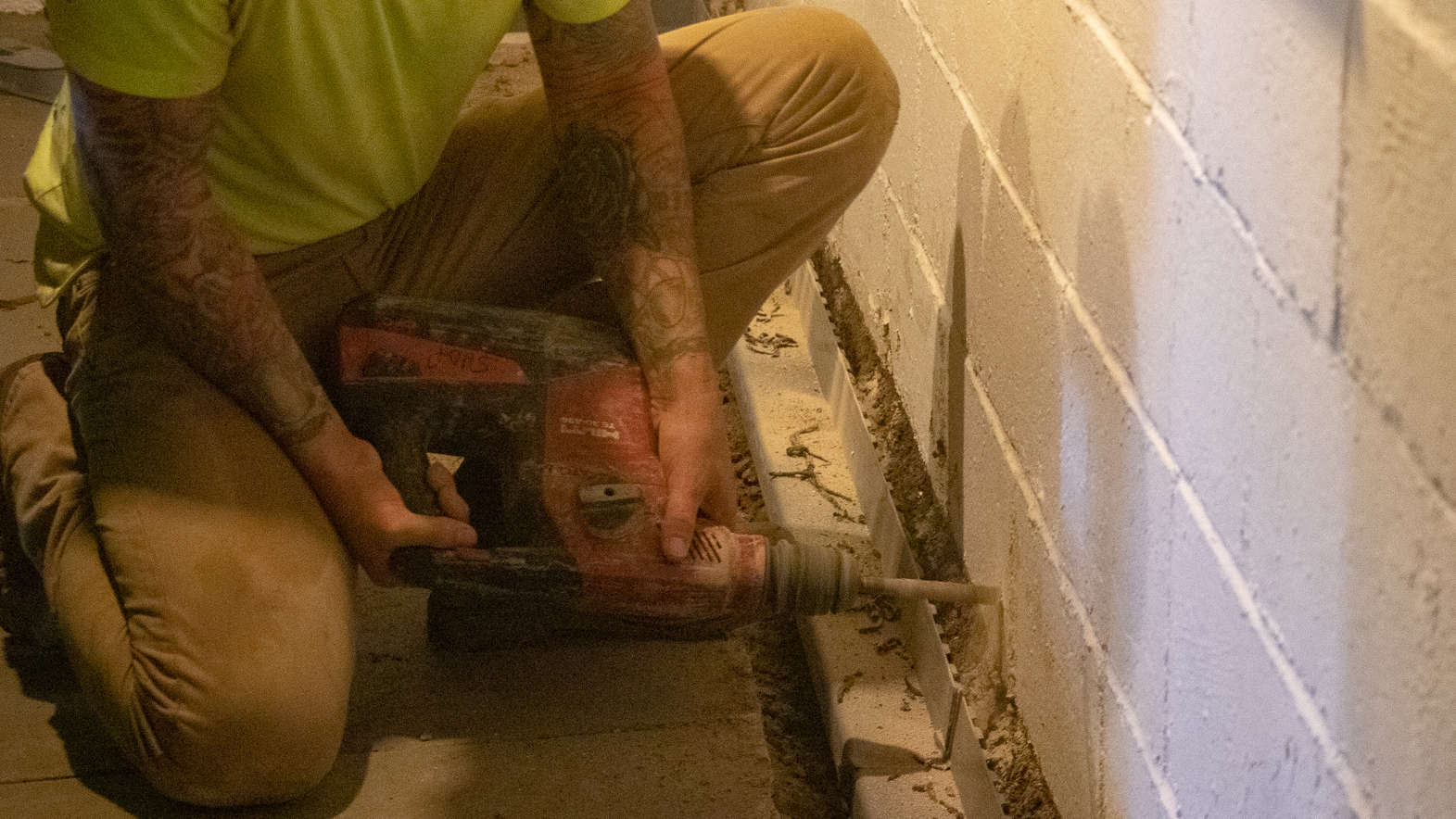
Drilling
Small holes are drilled into the mortar joints or concrete block walls. Weep hole screens are installed to prevent insects and debris from entering while allowing water drainage. Drilling is suitable for concrete block foundation walls, retaining walls, and existing brick walls where other methods are not feasible. Professional installation is recommended to ensure proper placement and avoid damaging the foundation. Experts can navigate around the rebar and steel reinforcements, prevent damage to underlying utilities, and maintain the structural integrity of the building.
Consider Building Codes and Wall Materials
When installing weep holes, it’s essential to consider local building codes, which may specify their size, placement, and screening requirements. The chosen method should be compatible with the wall material and its thickness. Drilling existing walls or handling thicker walls is best left to experienced professionals. This ensures proper placement and helps avoid structural damage.