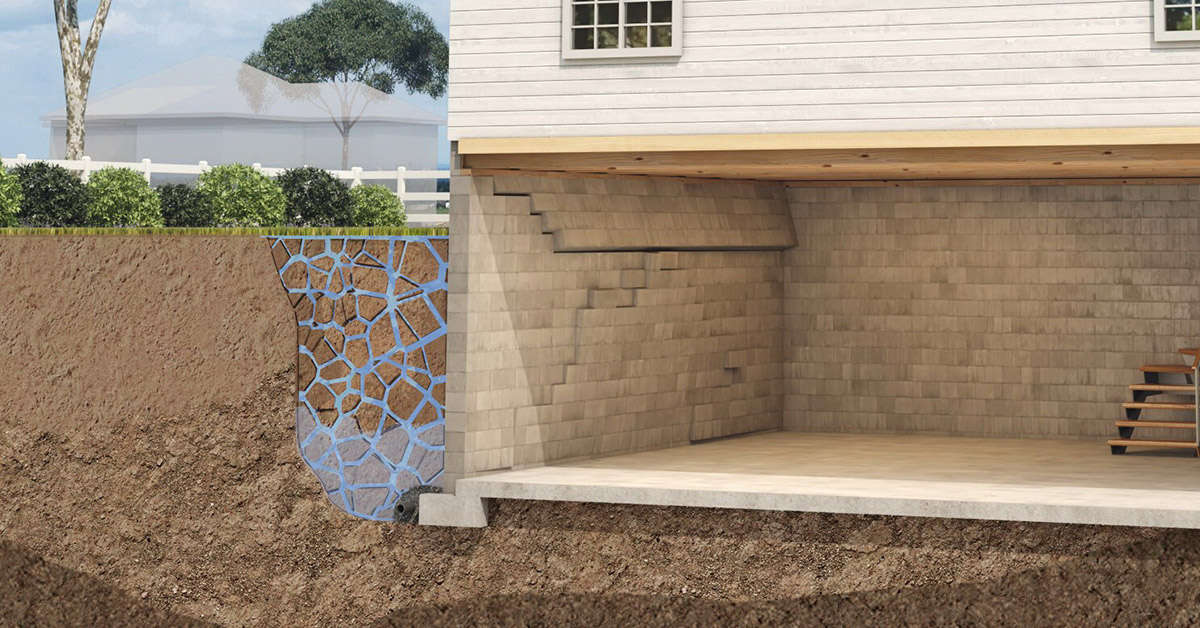
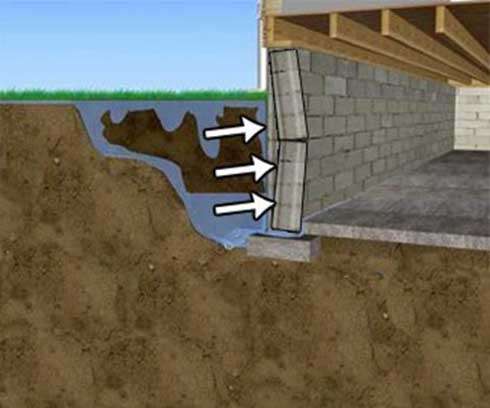
Hydrostatic pressure is something that every home has to deal with. After all, it is simply the combined weight of the soil and the water that it contains. This is something that every home is designed to cope with to a certain extent. Hydrostatic pressure only really causes problems when it reaches levels that are unbearable for your property. When this happens, the damage can be significant and widespread.
The reason that hydrostatic pressure causes issues like fragmentation, cracking, movement, and bowing in basement walls is because the pressure that it applies is lateral in nature. Concrete, as a material, is incredibly durable and strong. It can hold huge amounts of weight and has incredibly compressive strength. However, its tensile strength is a fraction of this. In short, concrete cannot stretch and lateral pressure forces it to flex in ways it is not made to.
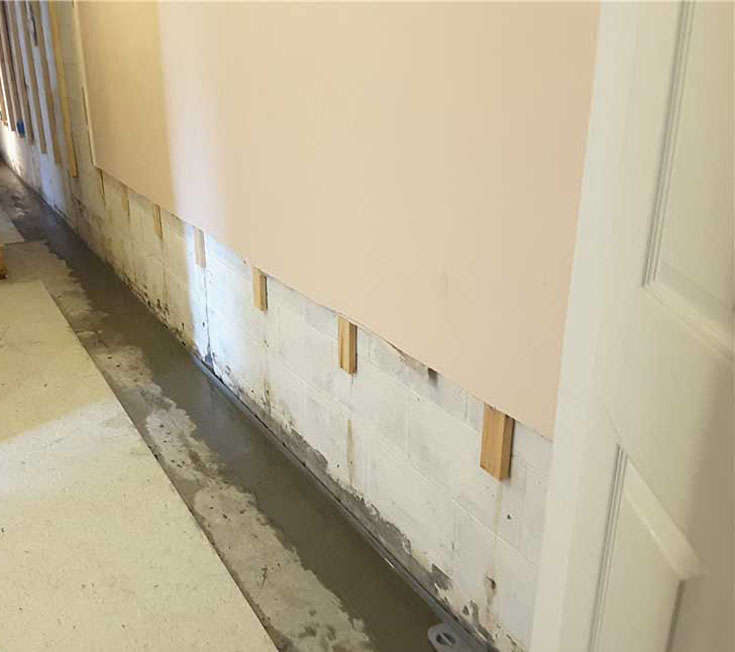
When this happens, it is common for affected concrete structures and surfaces to move, crack, lean, or buckle. Once the structure of your home has been damaged, furthermore, the water in the soil will start to seep through these cracks and into your home. This, in turn, can cause increased humidity, dampness, mold formation, wood rot, and many other moisture-related issues, as well as making your home far more inviting to pests of all kinds.