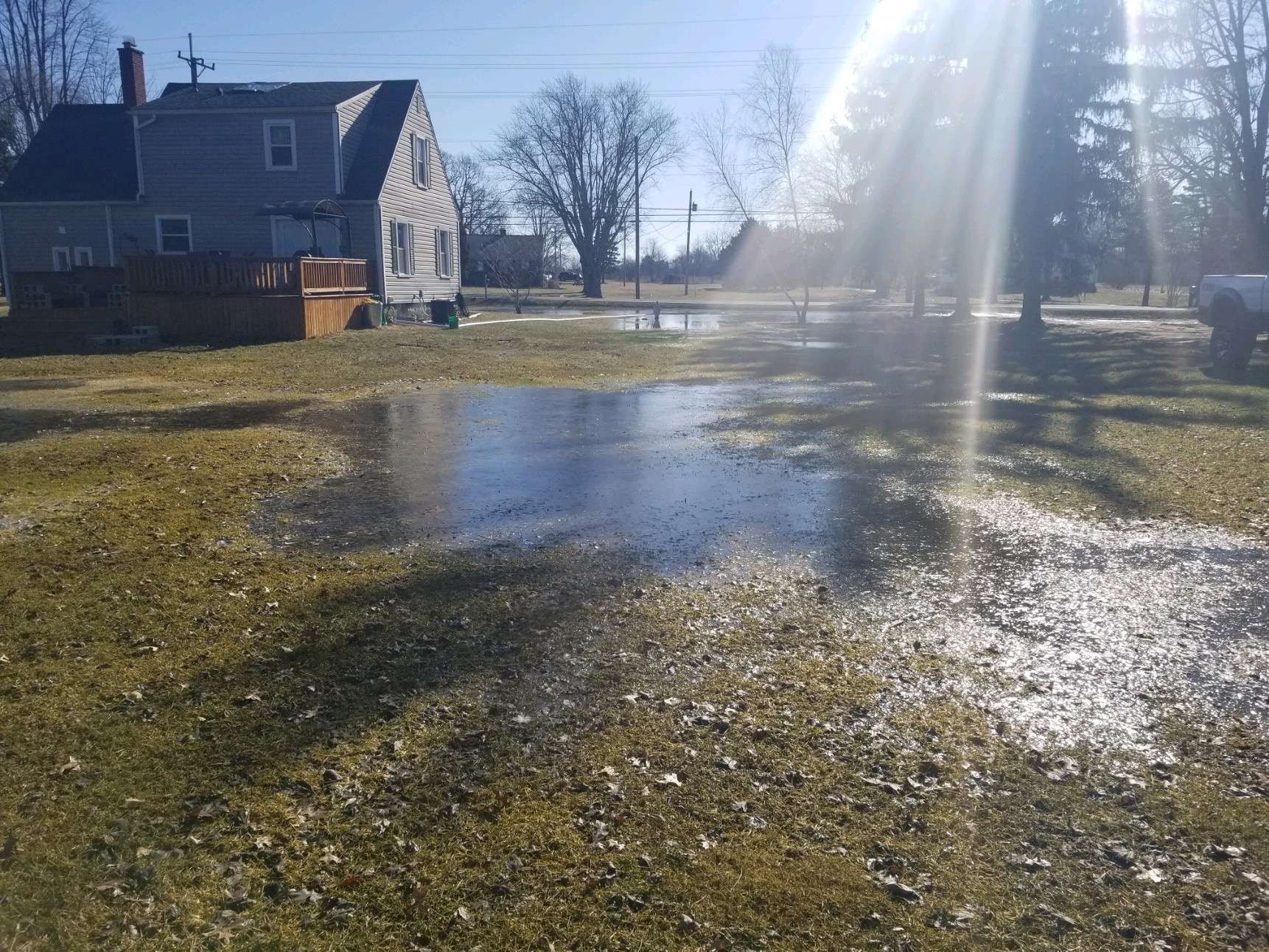
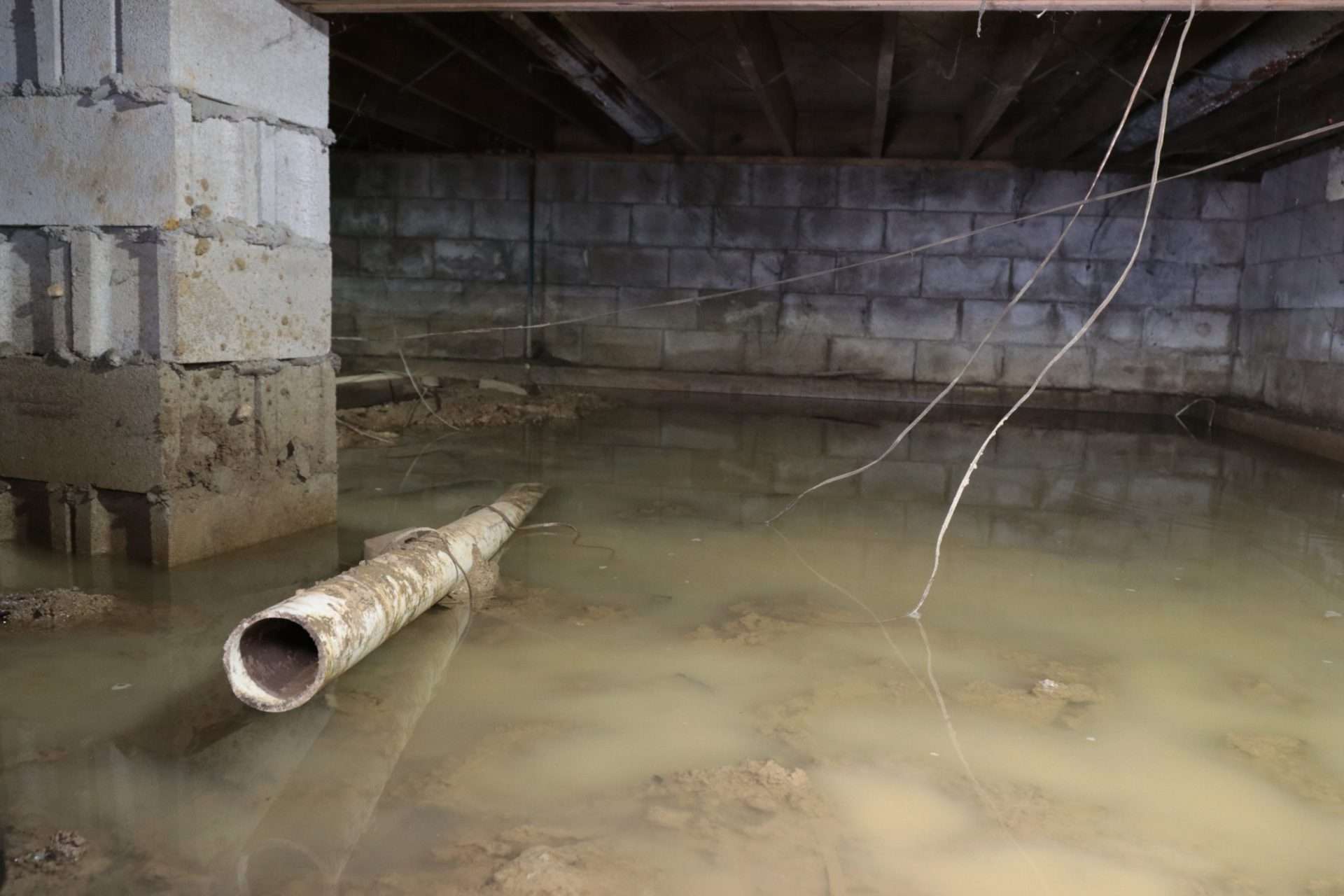
Despite building design and construction advancements, high water tables remain a significant challenge for homeowners. When the water table lies above the crawl space or basement floor level, it can become problematic, as groundwater infiltration causes significant water damage and structural issues.
Get the facts about high water tables on this page.

A high water table refers to the level in the ground where soil and rock become saturated with water. The depth of the water table varies from a few feet to much deeper, depending on the location. Excess rainwater or water from higher elevations can contribute to a high water table. These conditions are common in low-lying areas with poorly drained soils. Even areas with normal water tables can experience seasonal rises, leading to potential flooding.
Water tables vary depending on the season and the soil around your foundation. Here are the two water table variations:
Perched water tables can be temporary or permanent and occur when an impermeable soil layer traps groundwater above the main water table. They may fluctuate seasonally or persist depending on water source and drainage, happening even in high-ground areas where trapped water saturates the soil.
During spring, snowmelt and increased rainfall can naturally raise the water table. This may not be a problem unless the water doesn’t drain properly due to soil composition or inadequate drainage systems.
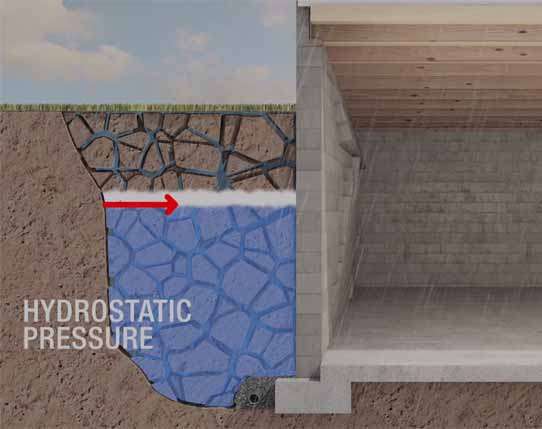
A high water table impacts your home and foundation in the following ways:
The severity of problems caused by a high water table depends on its height, the foundation type, and soil conditions, making proper foundation waterproofing crucial for preventing these effects.
The best way for homeowners to determine the depth of a water table is by measuring the water level in a shallow well with tape. Surface geophysical techniques exist, but professionals typically use them for more complex investigations. Observing ponding issues after heavy rain may also indicate a high water table, but it’s not always an accurate indicator.
Water tables fluctuate due to the balance between incoming and outgoing water. Heavy rain, melting snow, and limited drainage can raise water tables. Dry seasons, increased water usage, and adequate drainage can lead to a drop.

The following solutions help prevent the effects of a high water table:
If your home lies within a high water table, don’t worry. JES Foundation Repair experts offer free inspections to diagnose and address these issues. Our industry-leading solutions provide long-term results, keeping your home safe and dry.
Basement finishing has become more and more popular in recent years as homeowners seek to make the most of every square inch of space that their home has to offer. There are many regulatory requirements around what is needed to class a basement as a ‘habitable space’. For example, you will need an egress window of a certain size. However, waterproofing is not technically necessary to finish your basement fully.
However, it is a very good idea to waterproof your basement before you begin any finishing work. After all, nothing is certain to ruin your hard work and furnishings quite like dampness, flooding, and mold. The benefits of waterproofing your basement before finishing it are many, and the process itself should be very straightforward and cost-effective, unless there are serious underlying issues that must be addressed first.
Generally speaking, waterproofing your basement will start with clearing all obstructions and debris from the space. After this, insulation will be cut to size and installed alongside vapor barriers to prevent moisture from seeping through the bare concrete walls and into your home. Depending on the space you have, a professional may also suggest perimeter drains and a sump pump system to make sure that your finished basement stays safe and dry in even the worst weather. Waterproofing your basement before you finish it will not only protect your hard work, but will make your finished basement more comfortable to be in.
We strongly advise against attempting to waterproof or repair your crawl space on your own. The crawl space can be a dangerous area, and temporary solutions from hardware stores are insufficient. Trust the experienced professionals at JES Foundation Repair for a thorough inspection and customized waterproofing solutions. Contact us to learn more and schedule a free inspection.
Yes, ensuring the ground around your home slopes away from the foundation can help prevent water buildup. It’s essential to keep gutters clean and ensure that downspouts direct water at least 5 to 10 feet away from the foundation. Proper landscaping can significantly reduce the risk of water intrusion.

Groundworks Editorial Team