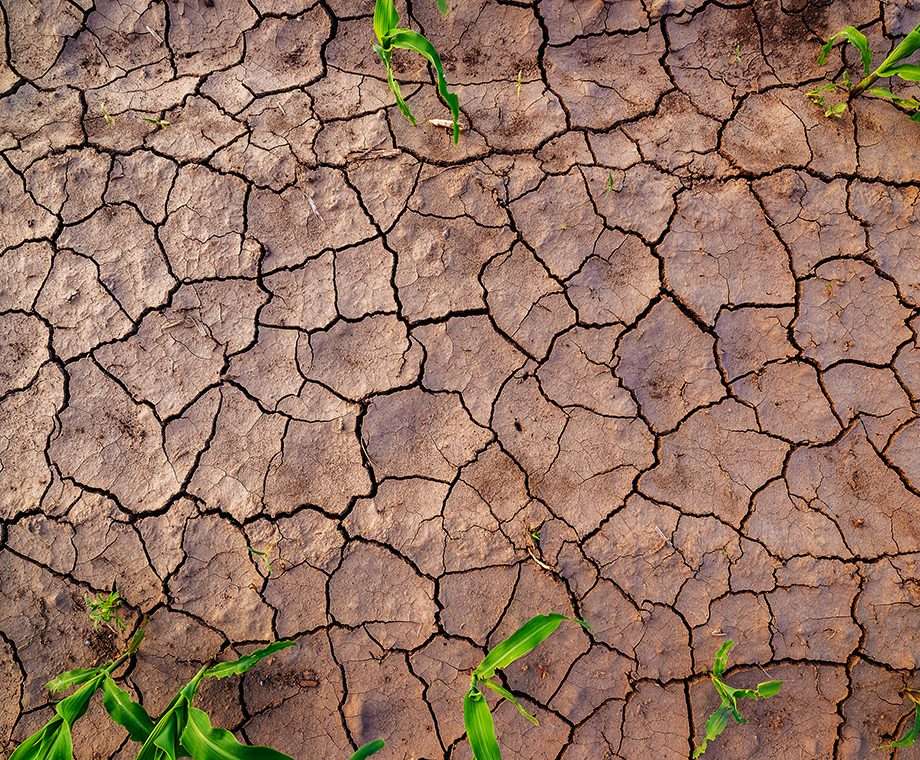
It’s hard to quantify the impact of damp clay soils around the country, let alone Baltimore, MD. Nearly 25% of homes experience structural damage or cracks due to soils with superior absorptive ability. With this hindsight, it’s important that you learn how clay soil affects your home and what you can do to minimize its impact.
Damp clay soil is bad news for any homeowner. If you don’t act now, you could be staring at serious foundation problems that could jeopardize your home’s structural integrity.
Damp clay soil is problematic for homeowners, as it could mean significant foundation problems that jeopardize structural integrity.
As the name suggests, damp clay is soil that has a high moisture content. The water could be from excess rainfall, snowmelt, or burst pipes near the foundation. This soil swells and expands in the presence of moisture.
While their particles are tiny, clay soils can absorb water with tremendous efficiency and expand several times their original size.
Clay can get wet or damp during heavy rains or because of poor drainage. Rains will saturate the soil with water and soften it. The same thing may play out if the drainage is poor, as water will collect around the foundation.
Leaking water lines, sewer lines, underground streams, and high water tables might also contribute to the wetness. We encourage you to perform checks once a year, both inside and out, to determine the condition of the foundation.
Summer and spring are particularly hard for your home as the soil’s conditions change drastically. Your foundation is likely to experience settlement and cracks during either season. Other telltale problem signs that should prompt you to take action include:
Clay soils that sit in the active zone, an area that’s affected by water or climate change, are likely to expand and contract depending on the soil moisture conditions. During the wet season, the soil expands and exerts pressure on your foundation walls (hydrostatic pressure), potentially causing them to crack or bow inward, which reduces their stability.
Drought conditions will be just as bad. The drying clay will shrink and form gaps that won’t bear the weight of your home. Within no time, the foundation can settle where gaps exist. Floors may be out of level, cracks can appear on the walls, and windows and doors will start sticking.
Clay and water have a stronger interaction than other soils due to the large surface area of their particles and the structure of the minerals that exist in the soil. Often, these minerals do influence soil movement and behavior.
When the soil swells, it loses its ability to bear the weight of your home. Swelling foundation soil may exert an upward force that can displace the foundation by up to eight inches. This can cause floors to become uneven.
Moisture is behind the many cases of foundation damage we’ve handled over the years. Most of your efforts should be directed toward controlling it. You can’t remove wet clay soil beneath the foundation. The most sensible thing to do is to try to minimize its impact on your home.
Here are several ways to manage this problem.
Whether you are noticing damp clay soil for the first time or have struggled with foundation issues due to wet clay soils, JES Foundation Repair can help you with your unique situation. Our foundation repair experts will visit your home for a thorough inspection and then fill you in on the next steps. To get started, contact us today to schedule a free foundation inspection and repair quote.
Groundworks
Who is the Groundworks Editorial Team? We're a small team of writers and researchers who spend our days digging into foundation repair, crawl spaces, and everything else that keeps a house standing. We work closely with Groundworks' field experts to make sure what we publish holds up — because when it's your home on the line, "probably right" isn't good enough.