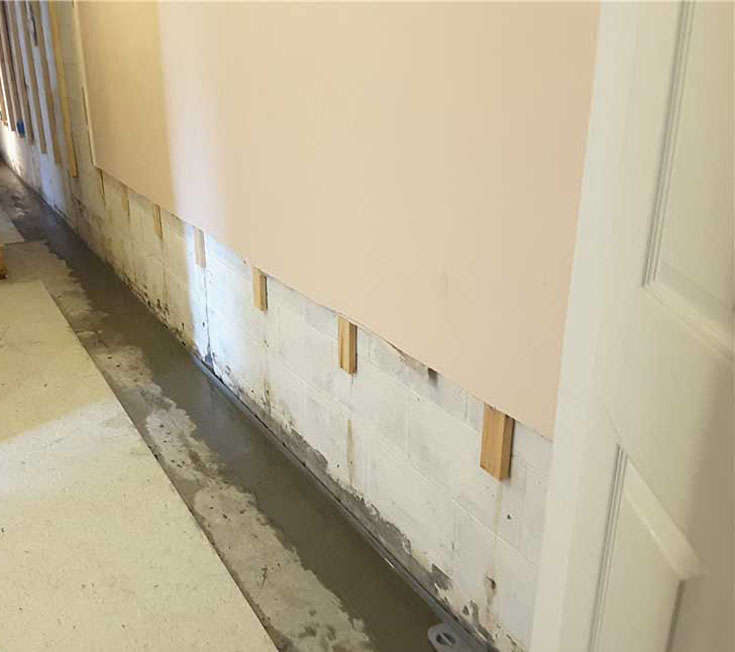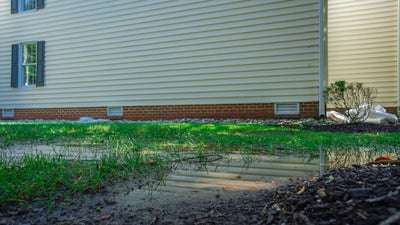
For Virginia homeowners who see standing water in their yard, the problem areas you see on the surface of the soil can have wide-reaching effects. Standing water can be dangerous for your home, causing a range of structural issues and increasing your flood risk. It can also be dangerous for your health and safety by attracting pests or causing mold growth.
To grasp the impact of standing water on your home and landscape, let’s start at the soil’s surface and explore how it can eventually affect your home’s structural integrity. Listed below are the ten adverse effects water has on your home.
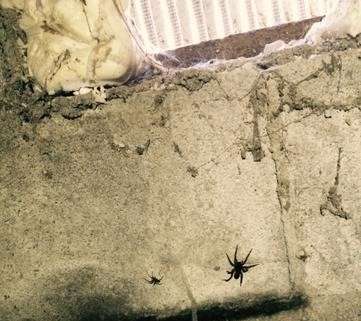
Standing water in the yard is a perfect breeding ground for mosquitoes and flying insects. This is, of course, a nuisance when you want to be enjoying your yard, but it could also increase your risk for diseases like West Nile Virus. Standing water can also attract pests like roaches, carpenter ants, and ticks, creating sanitation issues for your home and increasing the risk of Lyme disease. Persistent leaks can also create damp conditions that attract termites, which can cause extensive home damage.
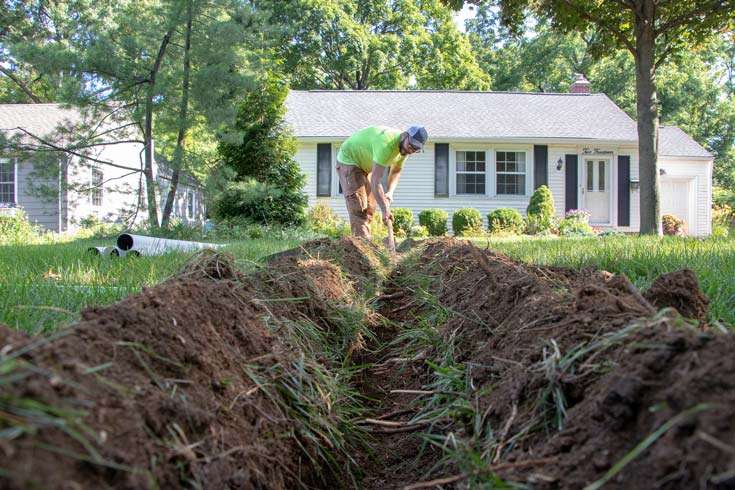
Below the surface of the soil, standing water is creating wet soil conditions that could damage plants and the lawn. Not only can dead plants make your yard unattractive, but saturated soil will damage tree roots. In the worst-case scenario, standing water could lead to a nearby tree crashing through your roof because its roots aren’t strong enough.
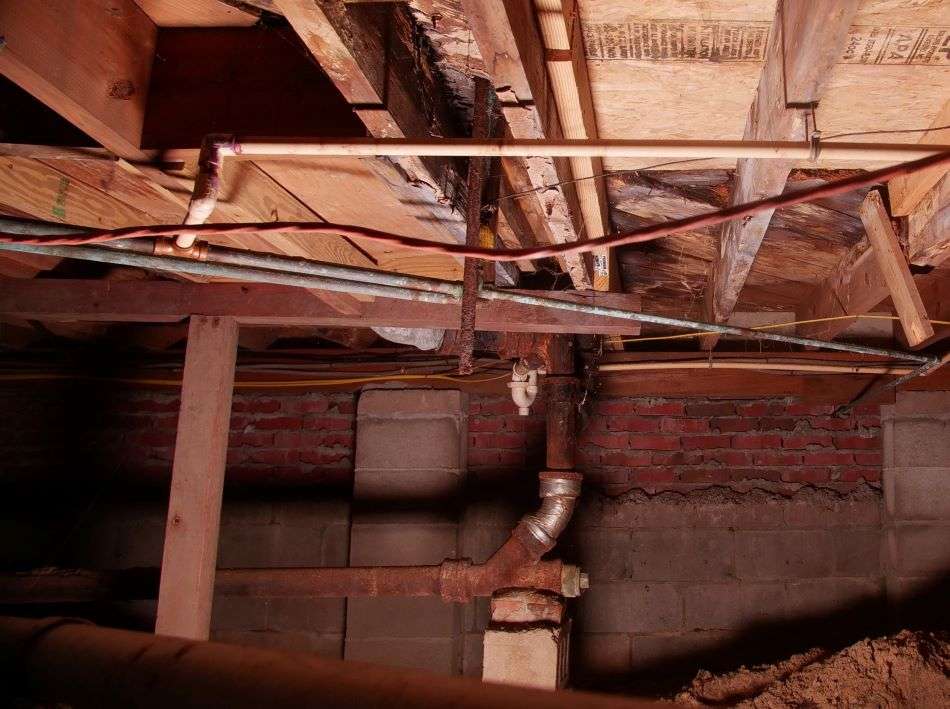
For homes that have septic systems, wet soil can result in septic failure. Saturated soils and wet conditions can cause leach fields to be unable to disperse wastewater. This can mean that pathogens from sewage enter the groundwater, spreading disease and contaminants. Also, wastewater could back up into the house, causing an awful mess.
Saturated soil loses its ability to filter out pathogens and pollutants. If you have standing water and saturated soil near a well, your drinking water could have the same risks as the surface water in lakes and streams. This includes pollutants, chemicals, fertilizers, E. coli, coliform, and wildlife contaminants.
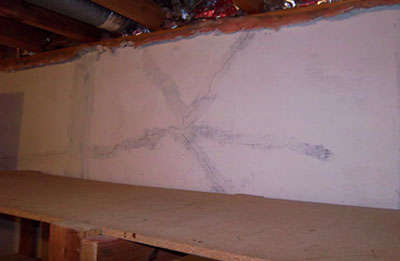
Standing water will also be constantly adding moisture to the soil around your home, increasing the force the water is exerting on your home’s foundation. This buildup of water, called hydrostatic pressure, can cause a range of structural problems, including flooding and foundation damage. Plus, this hydrostatic pressure can be hard to disperse because common construction practices can trap this moisture in the soil next to the house.
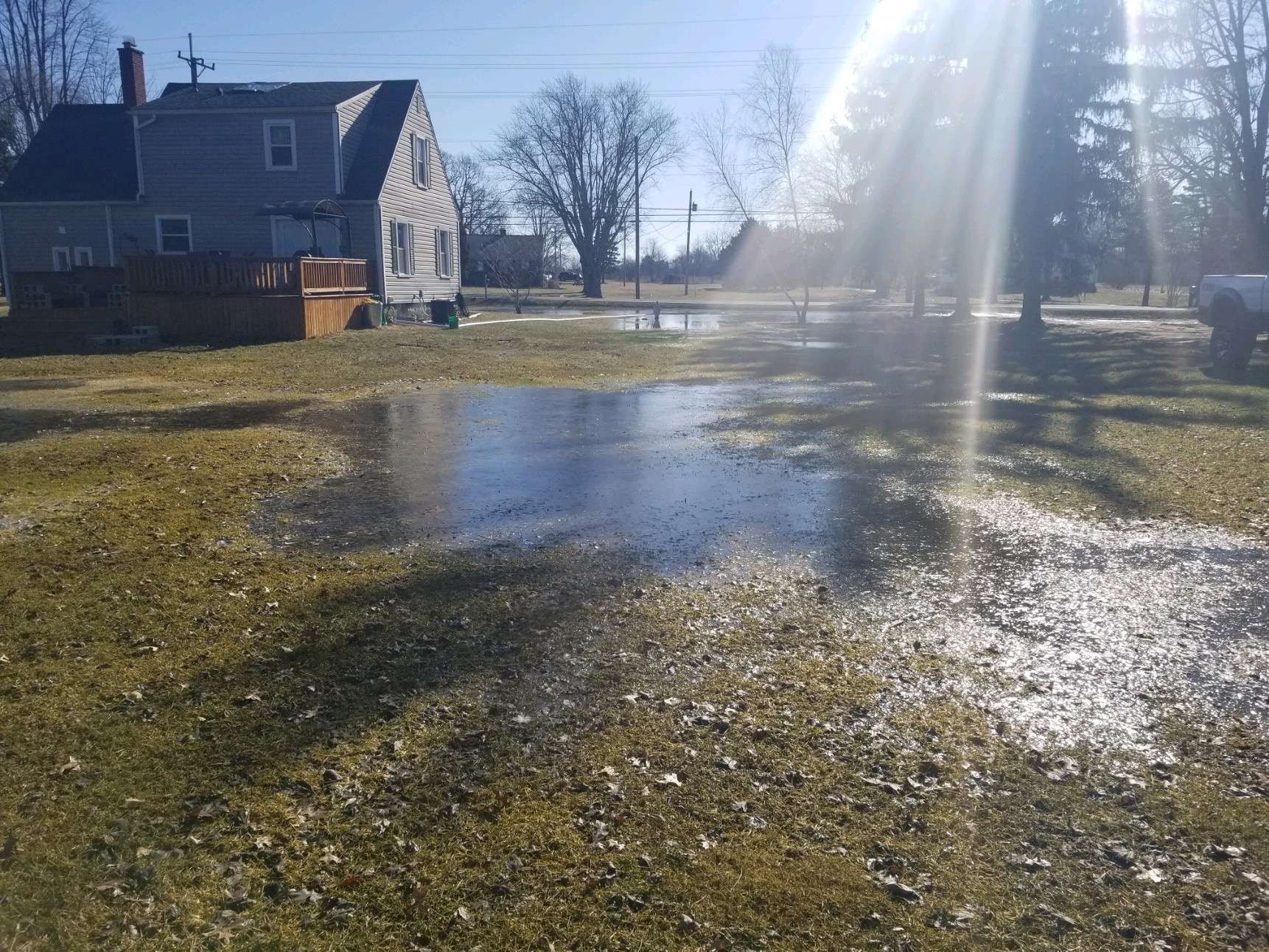
Standing water in your yard means that your home is less resilient against flood risks because stormwater and runoff have nowhere to go. This can be troublesome in areas where stormwater management is already a problem. For example, in cities like Virginia Beach, 38 percent of properties are already at risk of flood damage.
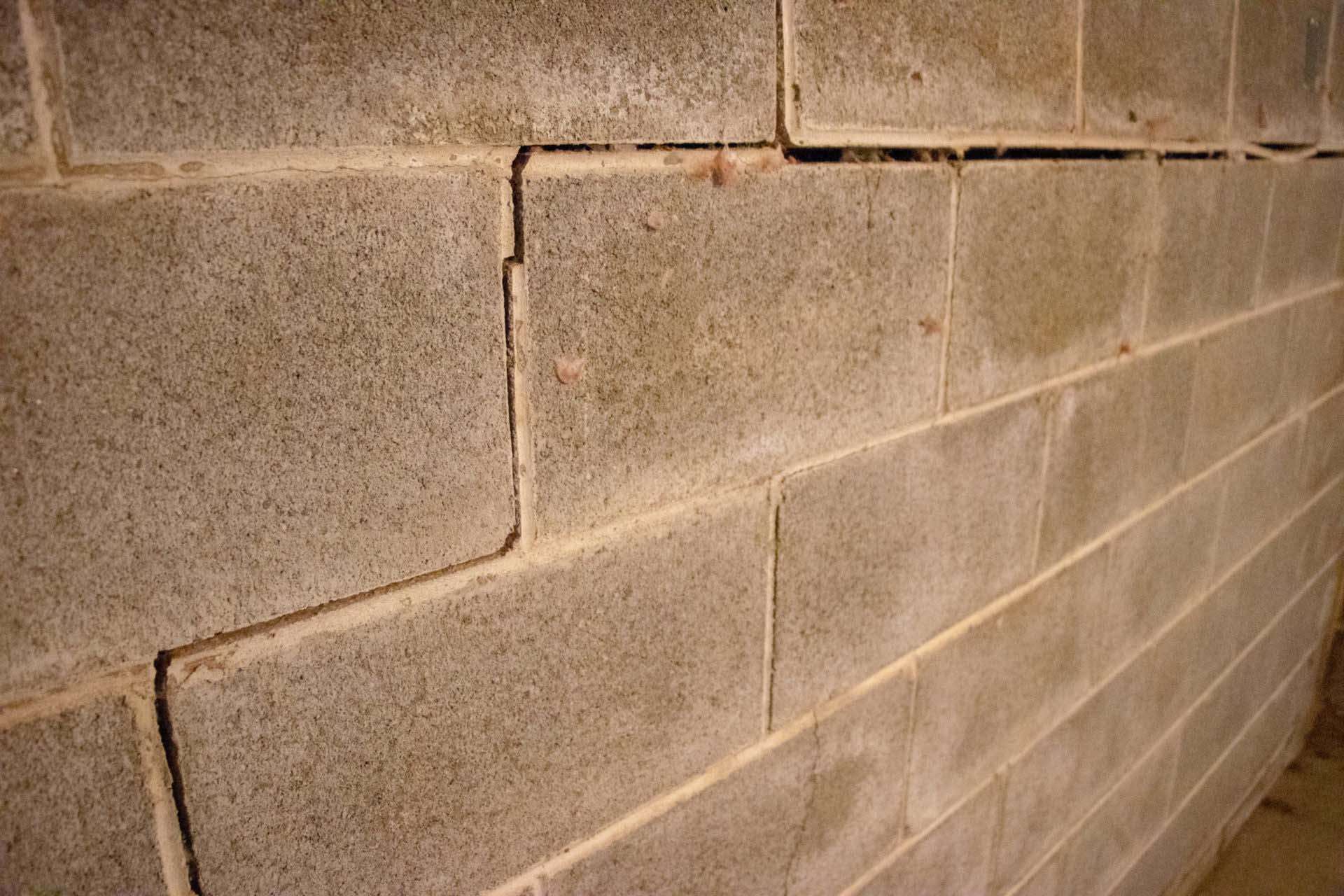
Water problems are among the leading causes of foundation damage. Water can shift the soil underneath the home, causing differential settlement where the house starts bowing, tilting, or cracking. Soil saturation can also eventually cause concrete cracks, allowing water an easy entry point into your home.
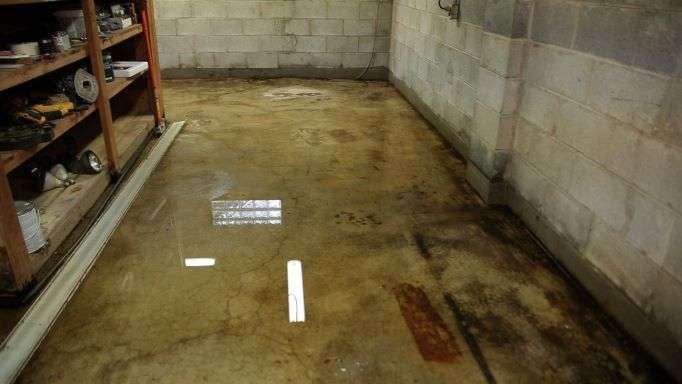
Eventually, outdoor water saturation will make its way indoors as water seeps through cracks to find the path of least resistance. Your indoor water problems may start as humidity before leading to moisture seepage and flooding. Over time, this can cause extensive home damage as well as health issues. For example, standing water can cause a risk of electric shock if the water comes in contact with outlets or wiring.
Having water issues in your home will commonly lead to air quality problems like mold and mildew. This can be dangerous for the occupants as well as making your home less comfortable and enjoyable. Issues like mold can be especially common in high-humidity areas like Richmond and Appomattox, but all Virginia homes with water issues could be at risk.
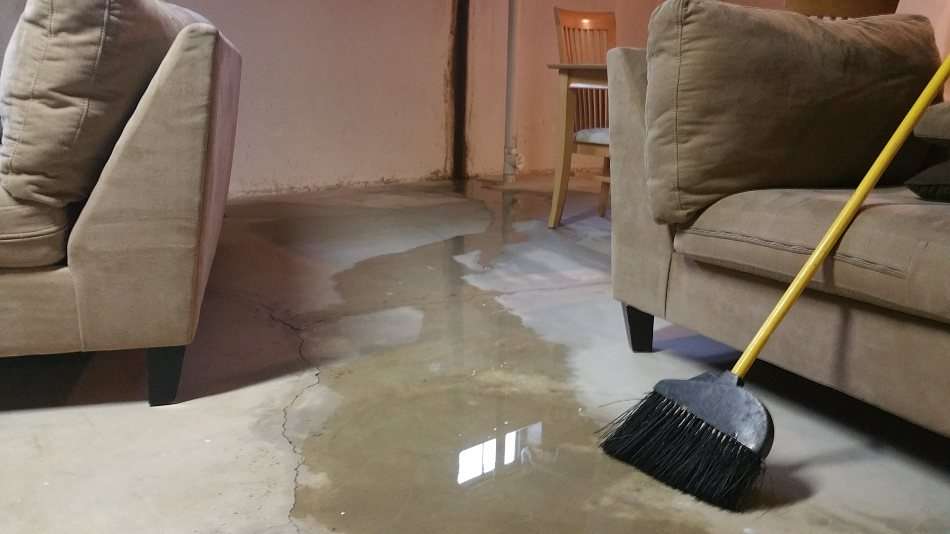
Water in the home could start to cause damage to the structure. For example, wooden support beams can become weak from water in your basement or crawl space, and appliances like furnaces, HVAC, and hot water heaters can be damaged by flooding and moisture problems. Flooding and water damage can be expensive. Even just one inch of water can cause $25,000 in damage to a home, and cities like Roanoke can see $5.2 million in flood damage to property each year.
Water management around your home is an important way you can protect your real estate investment and avoid both health consequences and structural damage. JES Foundation Repair provides customized solutions for Virginia homeowners to mitigate the water issues of each home.
Common solutions to standing water include:
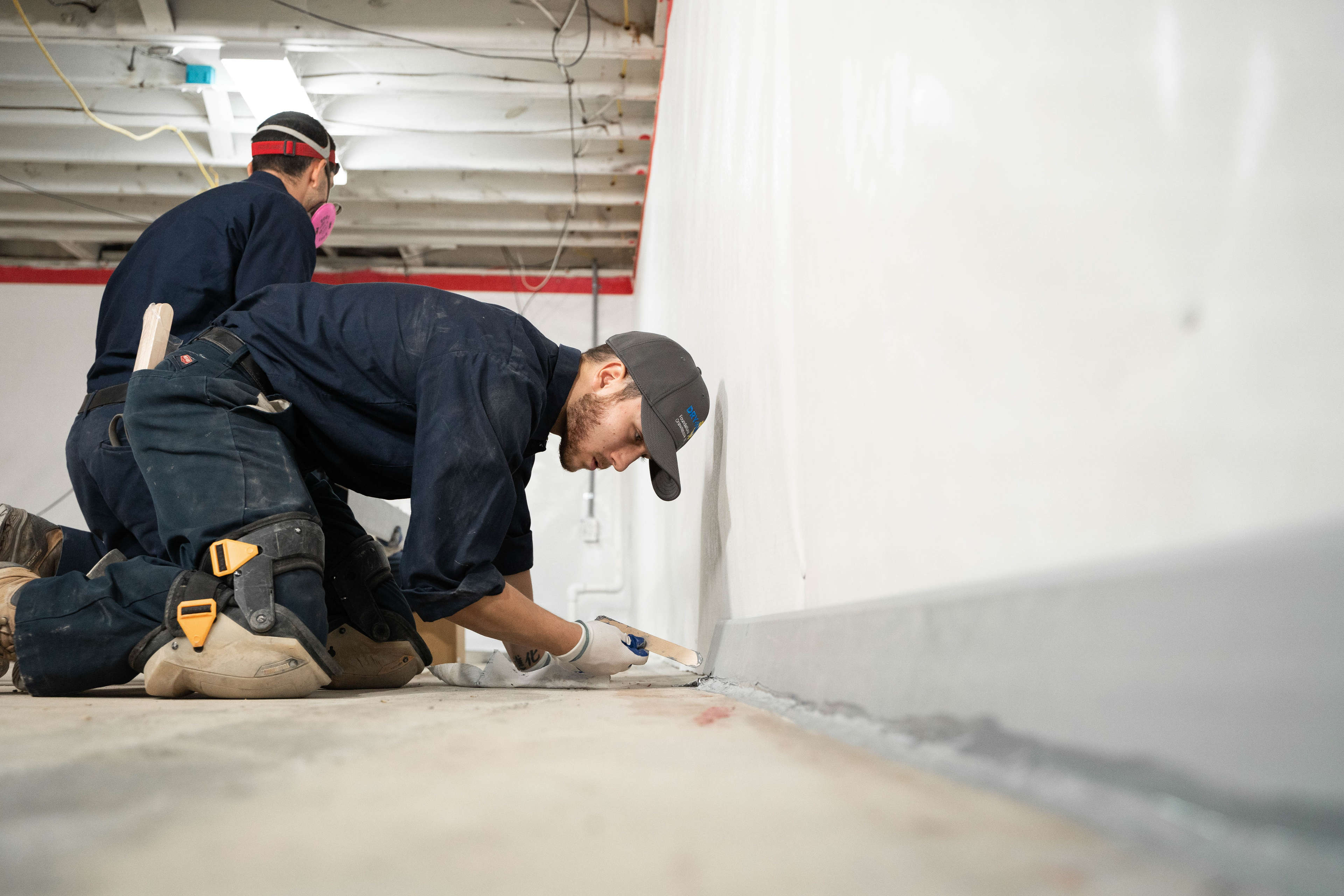
Moisture in your basement can quickly lead to mold growth, wood rot, and even foundation damage if it’s left untreated. The right waterproofing solution not only protects your home’s structure but also improves air quality, boosts property value, and gives you peace of mind every time it rains. Every home is different, which is why it’s so important to have a professional evaluate your unique situation before choosing a fix.
The experts at JES Foundation Repair have helped thousands of homeowners across Virginia keep their basements dry and healthy for good. Our team offers free, no-obligation inspections and customized waterproofing recommendations tailored to your home’s needs. Contact JES today to schedule your free inspection and take the first step toward a safer, drier, and more comfortable home.
Yes, the way your landscape is designed can impact your basement’s moisture levels. Improper grading or drainage can lead to water pooling around your foundation, increasing the risk of water seeping into your basement. Ensuring that your yard slopes away from your foundation and that downspouts direct water well away from your home can help mitigate this risk. If you suspect landscape-related moisture issues, JES Foundation Repair can provide guidance and solutions.
Not necessarily. However, cracks, especially those that are widening or horizontal, can become entry points for moisture over time. Even if they’re not causing issues now, they might in the future. Regularly inspecting and addressing cracks early can prevent larger problems down the road. Contact JES Foundation Repair for an assessment of any cracks or potential vulnerabilities in your basement.
Groundworks
Who is the Groundworks Editorial Team? We're a small team of writers and researchers who spend our days digging into foundation repair, crawl spaces, and everything else that keeps a house standing. We work closely with Groundworks' field experts to make sure what we publish holds up — because when it's your home on the line, "probably right" isn't good enough.