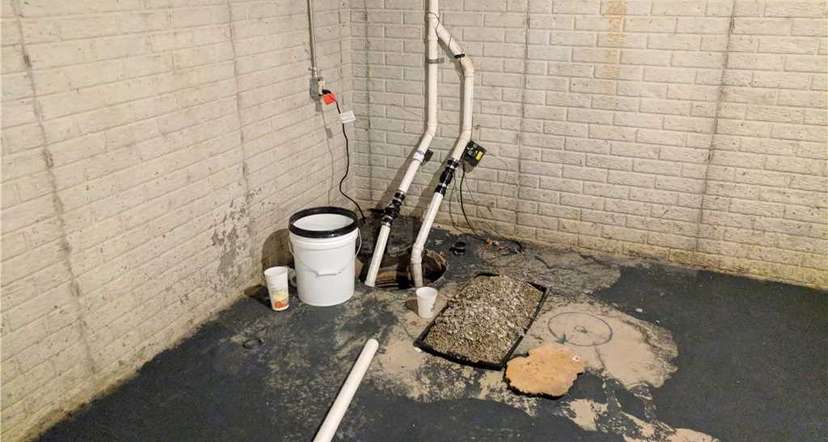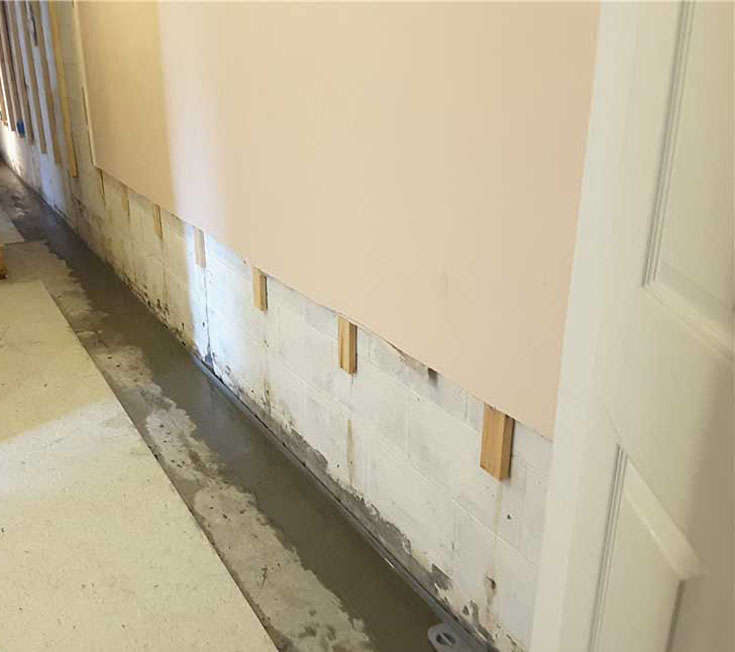

Interior Drainage System
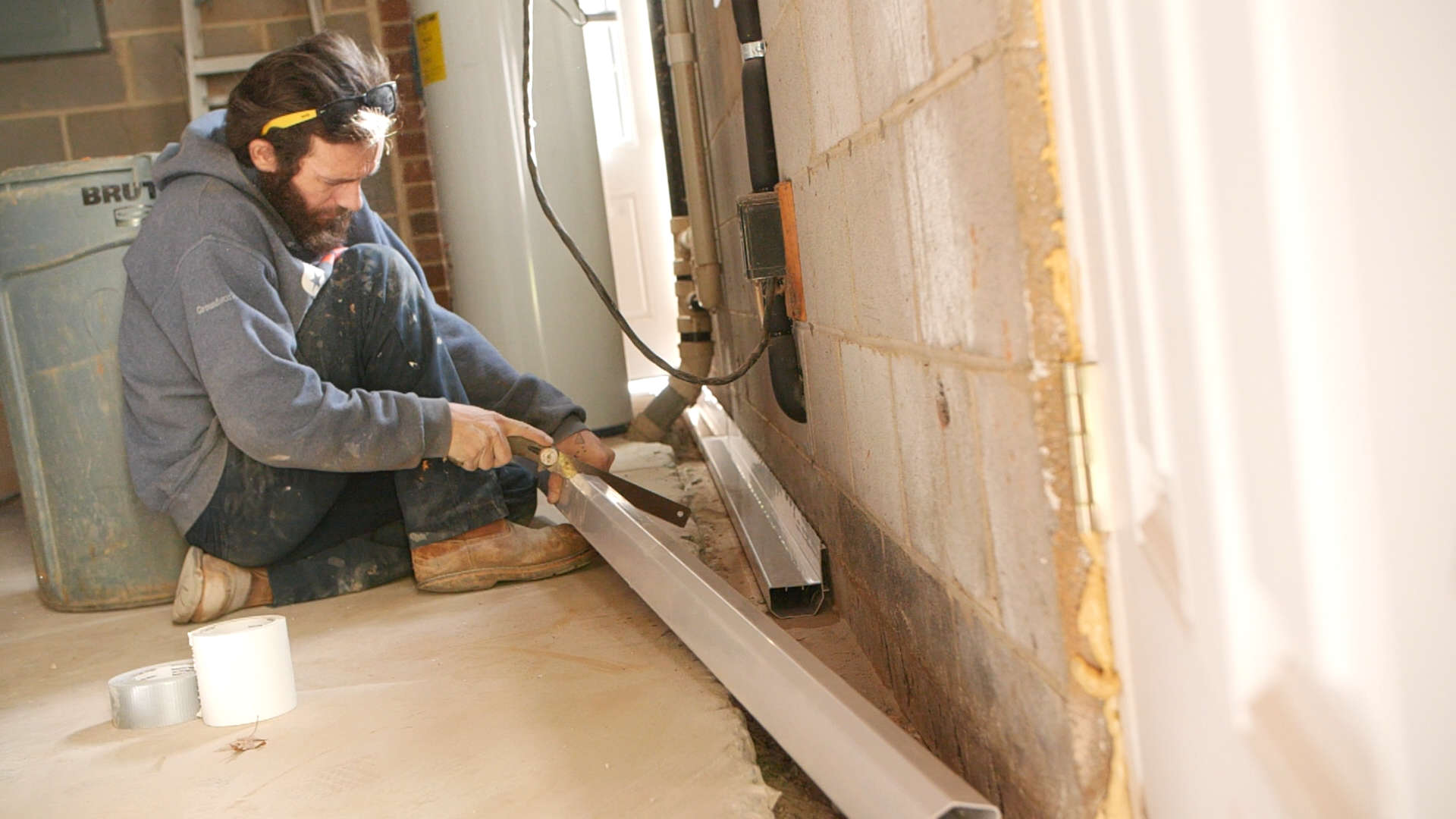
Interior drainage systems collect water accumulation and direct it to a sump pump. The sump pump then pumps the water away from the home, alleviating foundation pressure.
Have you noticed basement leaks or water accumulation around your foundation? If so, it is crucial to address these issues promptly to prevent potential foundation damage.
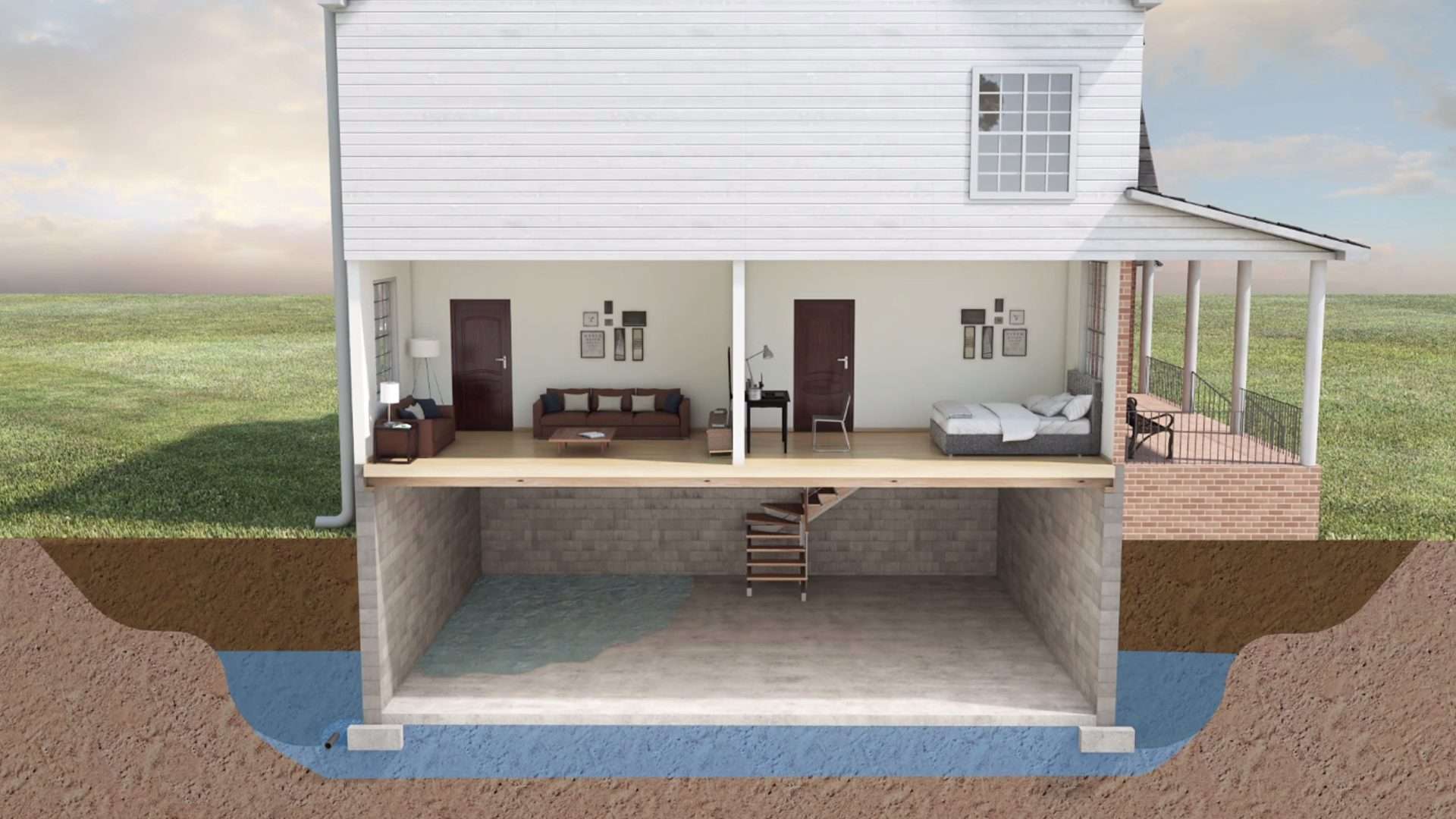
While many factors can cause these problems, the clay bowl effect is a common culprit. This page explains the concept, illustrates how it affects your home and provides solutions for repair.
The clay bowl effect refers to potential issues with standard foundation construction. Builders excavate an area slightly larger than the house’s footprint for the foundation and basement, then backfill the space around the completed foundation with the excavated soil.
This backfill is often looser and more porous than the undisturbed surrounding soil, creating a “clay bowl” shape where water can easily infiltrate and accumulate. The trapped water pressures the foundation walls, potentially causing cracks, leaks, and bowing basement walls.
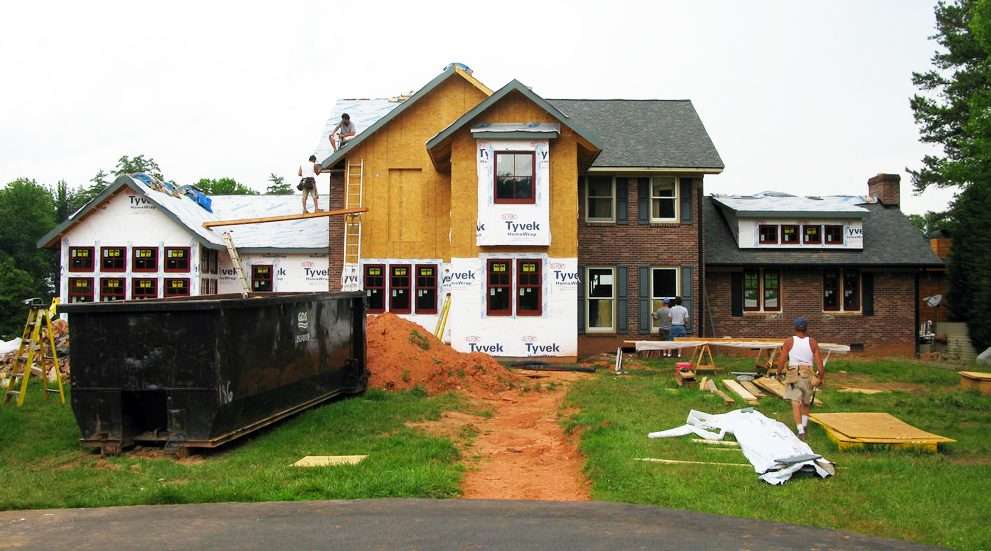
Backfill is the soil material used to refill an excavated hole or trench. It involves refilling these areas in layers, typically starting after floor joist placement.
Types of backfill include coarse-grained soil, limestone screenings, trench backfill, CA7 bedding stone, CA6 base stone, 3-inch coarse stones, and commercial fly ash or furnace slag by-products. Functions of backfill include:
Proper compaction is crucial to prevent water damage and the clay bowl effect.

Signs that your foundation may be experiencing damage from the clay bowl effect include:
If you notice these signs, contact a foundation repair specialist for an inspection and customized solutions to prevent further damage.
Interior drainage systems collect water accumulation and direct it to a sump pump. The sump pump then pumps the water away from the home, alleviating foundation pressure.
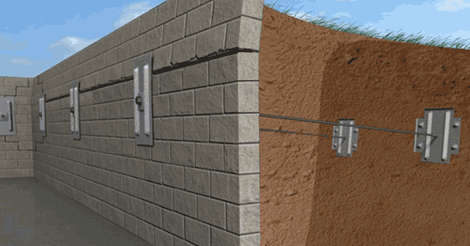
Wall anchors, made from high-grade galvanized steel, stabilize the foundation and hold the walls in place, preventing further bowing. They are typically embedded in the soil near the foundation walls.
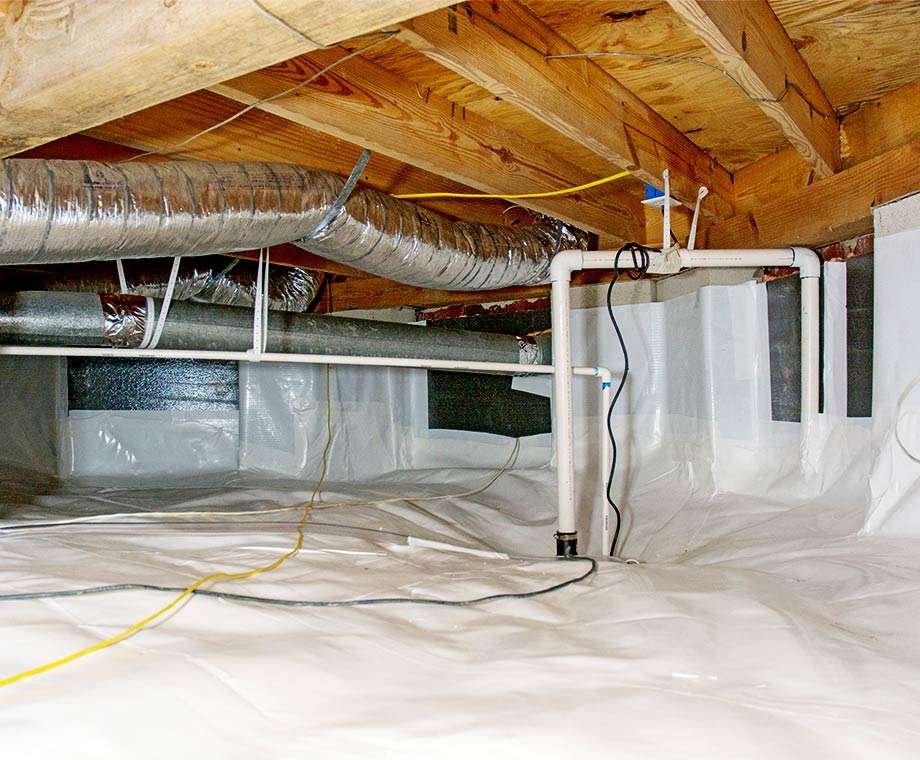
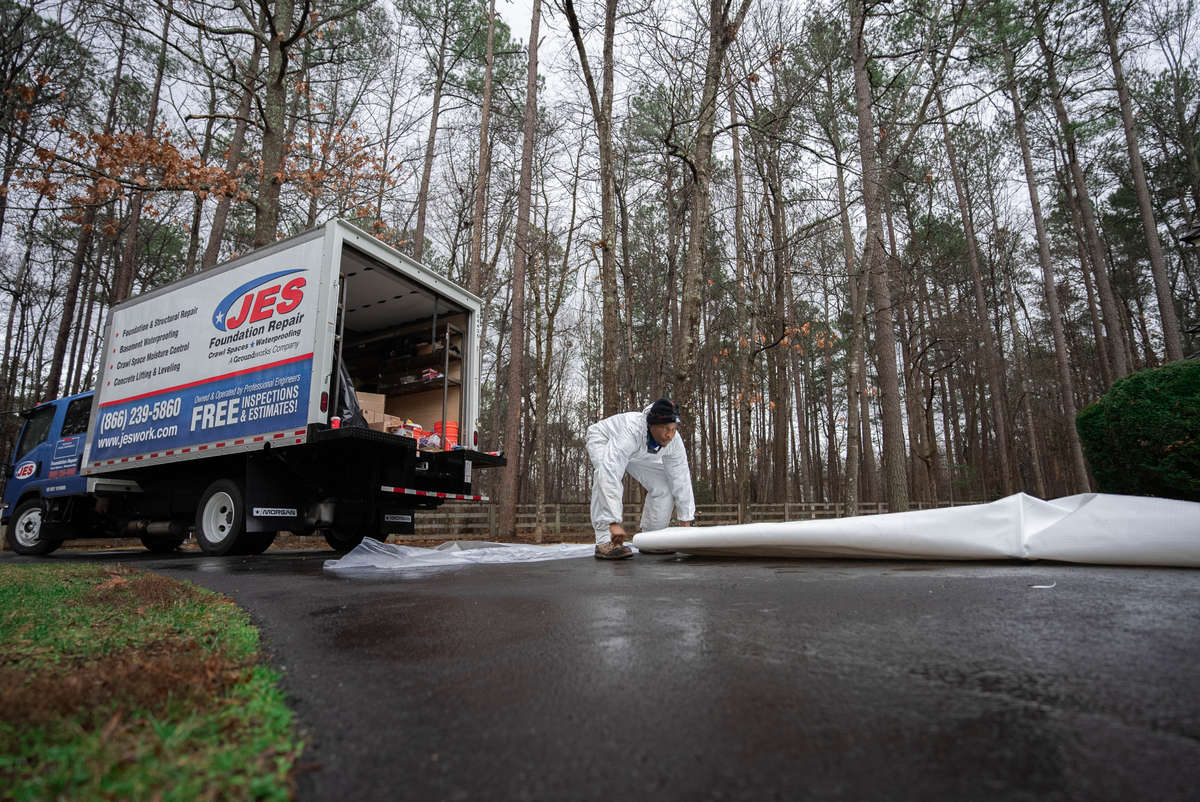
At JES Foundation Repair, our experienced professionals provide comprehensive basement and crawl space waterproofing solutions. Contact us today to schedule a free inspection and receive a no-obligation quote. Let us help you protect your most valuable asset and give you the peace of mind you deserve.
We strongly advise against attempting to waterproof or repair your crawl space on your own. The crawl space can be a dangerous area, and temporary solutions from hardware stores are insufficient. Trust the experienced professionals at JES Foundation Repair for a thorough inspection and customized waterproofing solutions. Contact us to learn more and schedule a free inspection.
While DIY solutions may be tempting, they often fall short and can be hazardous. Professional services provide durable and safe solutions. Contact JES Foundation Repair for a free crawl space inspection and no-obligation estimate.
It’s recommended to regularly check your basement for common problem signs, especially after heavy rainfalls or during seasons with increased precipitation. Monthly checks can help you spot early signs of water intrusion, allowing for timely intervention.
Groundworks
Who is the Groundworks Editorial Team? We're a small team of writers and researchers who spend our days digging into foundation repair, crawl spaces, and everything else that keeps a house standing. We work closely with Groundworks' field experts to make sure what we publish holds up — because when it's your home on the line, "probably right" isn't good enough.
Basement waterproofing and crawl space encapsulation prevent outside water from seeping into your basement or crawl space. These professional systems include sump pumps, dehumidifiers, vapor barriers, and drainage matting.
Professional, comprehensive repair solutions from JES ensure your home remains safe and dry from damage caused by the clay bowl effect.