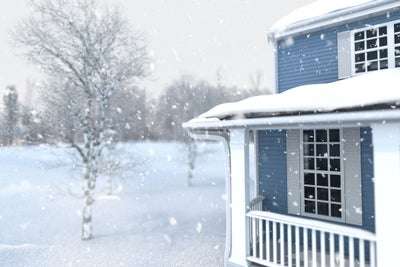
The average annual snowfall can vary quite a bit in Virginia, ranging from 10 inches in Richmond to 52 inches in Wise. Maryland shovels 20 inches in Baltimore and more than 100 inches in Oakland.
While snow may look beautiful as it drifts down and coats everything in pristine white, it also brings substantial amounts of water. The general rule is that 13 inches of snow equals one inch of rain. Collected on a 2,800-square-foot roof, it adds up to 1,743 gallons of water.
That’s the case with an average snowfall. Lighter, powdery snow can melt into around 1,000 gallons of water, while heavy, wet snow can produce more than 5,000 gallons.
A significant amount of water collects as snow on your roof, lawn, shrubs, and trees. As it melts during the day, the water saturates the soil and can create underground flow toward your home’s foundation.
This happens in part due to the clay bowl effect. During construction, soil is excavated and then backfilled around the foundation. This backfilled soil drains differently than the untouched soil farther out, making it easier for water to flow toward your basement or crawl space. As water accumulates, it builds up hydrostatic pressure against the foundation walls, increasing the risk of cracking and flooding.
Another factor is snow piling caused by drifting or snow removal. Whether it melts gradually or all at once, this water flows into soil that may already be oversaturated, adding to the pressure around your foundation.
Then there’s the snow on your roof. Sunlight and warmer daytime temperatures cause it to melt, but overnight freezing turns that water into ice. This cycle can freeze gutters and downspouts and lead to ice buildup along the roof’s edge, known as ice dams. These block drainage and trap more water on the roof, which refreezes and adds to the ice accumulation.
Another cause of snow melt on the roof and around the foundation is heat escaping from the home due to poor insulation in the attic and foundation walls. This added warmth accelerates melting, sending more water into the soil surrounding the foundation.
Gutters, downspouts, downspout extensions, and landscape grading are all designed to move water away from the foundation. When gutters and downspouts freeze up, the snowmelt runs off the roof and drops directly onto the soil around the foundation.
If the soil is frozen, the water pools up and freezes, just waiting for the next thaw to find its way into your basement or crawl space. More likely, the soil will already be saturated with melting snow, and the flow from the roof will compound the hydrostatic pressure building up, seeking or creating openings in the foundation walls.
The key to protecting your foundation from snowmelt is prevention, which includes improving drainage around the foundation to direct water away from your home. Here are our recommendations:
For professional advice on protecting your home from winter weather and spring snowmelt, schedule a free inspection and repair estimate from the basement waterproofing and foundation repair experts at JES Foundation Repair.
Groundworks
Who is the Groundworks Editorial Team? We're a small team of writers and researchers who spend our days digging into foundation repair, crawl spaces, and everything else that keeps a house standing. We work closely with Groundworks' field experts to make sure what we publish holds up — because when it's your home on the line, "probably right" isn't good enough.